
The Soap That Survived Empires: A History of African Black Soap
Known as ose dudu in Yoruba and alata samina in Twi, African black soap has outlasted every empire that tried to suppress, replicate, or commodify it.
Ose Dudu and Alata Samina: Ingredients and Origins
African black soap is produced primarily in West Africa, with distinct regional formulas in Nigeria, Ghana, Benin, and Togo. The base ingredients are consistent: ash from plantain skins or cocoa pods, palm kernel oil, shea butter, and water. The ash acts as a lye equivalent, saponifying the fats through a process that traditional producers have refined over centuries. Nigerian ose dudu tends toward a softer texture with a higher plantain content, while Ghanaian alata samina is often harder and darker, favoring cocoa pod ash.
Why Dermatologists Took Notice
Research into African black soap accelerated in the early 2000s, driven partly by anecdotal reports of improvement in patients with eczema, psoriasis, and hyperpigmentation. The soap's pH sits closer to skin-neutral than most commercial bars, reducing the stripping effect that causes post-wash dryness. Plantain ash contains high concentrations of potassium, which contributes to a gentler cleansing action. Several small clinical studies confirmed measurable reductions in surface bacteria without the disruption of the skin's natural microbiome that stronger surfactants cause.
Cultural Role in Naming Ceremonies
In Yoruba communities, ose dudu appears in the naming ceremony performed eight days after a child's birth. The soap is used to wash the infant as part of a ritual sequence that also involves water, oil, kola nut, and honey, each carrying a specific symbolic charge. The soap's role is purification, marking the transition from the spirit world to the human one. Similar ritual uses appear in Akan communities in Ghana, where alata samina is part of the materials assembled for puberty rites.
What to Look For
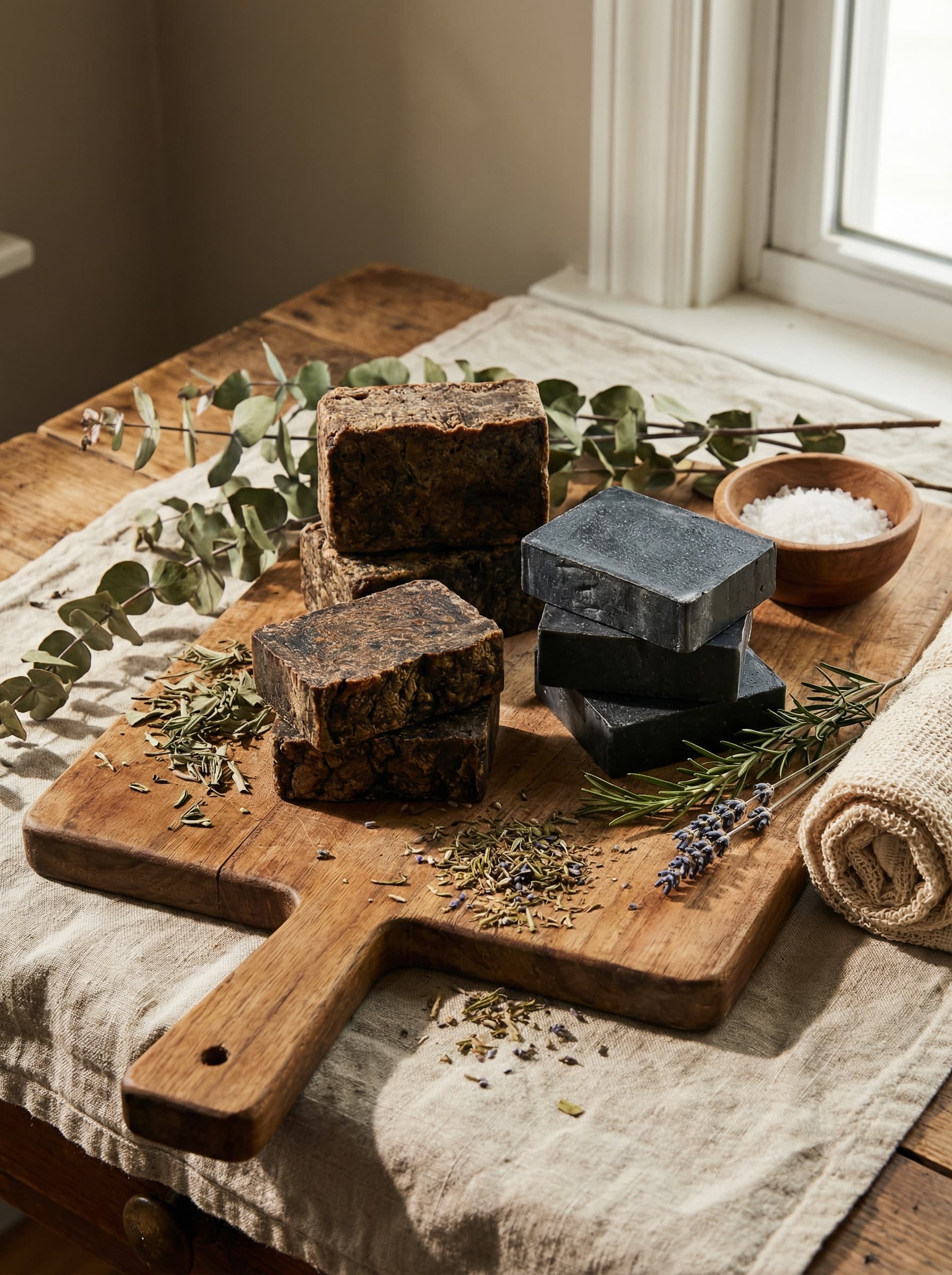
Authentic African black soap should be dark brown to black, slightly crumbly or soft depending on the regional formula, and should carry a mild, earthy scent from the ash. White or perfectly uniform bars are almost certainly synthetic approximations. The ingredient list should be short: plant ash, palm kernel oil or cocoa butter, shea butter. Akente Express carries soap sourced directly from producers in Lagos and Kumasi, with full ingredient disclosure on every label.